SRP Electric Blog

Author Archive

Florida State University guys get to play with 24,000-vdc power test system

Posted in: Report on January 24th, 2015

fsuCAPS Power Systems Research Group. Photo credit: Bill Lax/Florida State University.

Florida State University’s Center for Advanced Power Systems (CAPS) has unveiled a new 24,000-volt direct current power test system, claiming it is the most powerful of its kind available at a university research centre in the world.

With a capacity of 5MW, the new system will give CAPS the ability to test electrical equipment in real-world conditions, says FSU, and companies looking to build next-generation power equipment will be able to test those in the Tallahassee-based facility.

“It’s a very long and expensive process for companies to do this at the electrical grid,” said Ferenc Bogdan, senior engineer and associate in research at CAPS. “We can now do all of that cheaper and faster here.”

To create the system, CAPS put together four individual 6kV, 1.25MW converters that can be arranged in any combination—in series or parallel—to form a flexible test bed for medium-voltage direct current (MVDC) system investigations. The MVDC system was built by ABB Inc. based on CAPS’ specs.

“This is the first time anyone has strung together four individual converters of this magnitude and operated them in a safe and controlled manner,” said Michael Steurer, senior research faculty and leader of the Power Systems Research Group at CAPS.

BC scientists debunk a myth within the theory of superconductivity — the phenomenon of electricity flowing with no resistance

Posted in: Report on January 17th, 2015

University of British Columbia physicists have detected ‘charge ordering’ in electron-doped cuprate superconductors for the first time, according to research published today in Science.

Charge ordering is a ripple-like instability at the electron level that competes with superconductivity and likely suppresses the temperature at which materials demonstrate superconducting properties. Until now, researchers had only observed the phenomenon in other forms of cuprate materials.

copper-based superconductorsThis image depicts Eduardo H. da Silva Neto and Andrea Damascelli at UBC’s Quantum Matter Institute.
Credit: University of British Columbia.

“The universality of charge ordering across these very different materials shifts our perspective, and could propel future breakthroughs,” says Eduardo H. da Silva Neto with UBC’s Quantum Matter Institute and the Max-Planck-UBC Centre for Quantum Materials, who led the experiment with researcher Riccardo Comin.

“We need to understand how charge ordering is formed in materials and ideally tune it, allowing superconductivity to occur at temperatures closer to room temperature,” adds da Silva Neto, who is a Canadian Institute for Advanced Research postdoctoral fellow at UBC.

“Our work opens up a new avenue to study charge ordering and the mysteries of superconductivity in these materials,” says UBC professor Andrea Damascelli, leader of the research team. “Now we can compare and contrast characteristics that are common across both flavours of copper-based materials — both hole- and electron-doped.”

Doping involves adding impurities (electrons or ‘holes’) into materials in order to spur the material to exhibit unusual behaviours such as high-temperature superconductivity.

Recent superconductivity research on charge ordering in hole-doped cuprates has focused on understanding its connection to another mysterious state: the pseudogap. Most experiments suggest that the pseudogap is a necessary ingredient to charge ordering, and consequently the suppression of superconducting properties.

But the UBC research indicates that the pseudogap is not a prerequisite for charge ordering in electron-doped materials.

Background
Superconductivity — the phenomenon of electricity flowing with no resistance — occurs in some materials at very low temperatures. High-temperature cuprate superconductors are capable of conducting electricity without resistance at record temperatures, higher than the boiling point of liquid nitrogen. Because of their unrivalled characteristics, they represent the best candidates to advance current superconductor technology, which includes a broad range of applications such as: quantum computers, MRI, high-precision magnetometry, levitating high-speed trains, and lossless power lines.

A future of power outages; what happens when the lights go out?

Posted in: Commercial/Industrial Green Residential Solar on November 4th, 2014

lights-out

It is impossible to imagine the modern world without electricity. We are dependent on an uninterrupted source of power and when it fails the consequences are devastating.

Over the past decade there have been 50 significant power-outage events occurring in 26 countries, and the demand for electricity continues to grow stronger with rapid population growth, compact urban areas and an ‘addiction’ to electric appliances. In their article “Exergy and the City: The Technology and Sociology of Power (Failure),” Hugh Byrd and Steve Matthewman predict that these blackouts are only a dress rehearsal for a future in which they will appear more frequently and with greater severity.

The authors highlight the frail electrical power system of the ‘privileged’ West where it is taken for granted that there will be a continued stable supply of electricity for the distant future.

Electrical power generation and distribution is more vulnerable than we might assume due to poor investment in infrastructure and many power grids operating close to capacity. Over the past 30 years, the demand for electricity has increased by 25%, while the construction of transmission faculties has fallen. It is argued that it will take large investments in electric utilities to meet future demand.

With our electrical infrastructures under threat, our dependence on electricity and our vulnerability when a blackout occurs are exposed; the economic damage of power outages and quality disturbances are estimated to cost the American economy between $25 and $180 billion per annum, although the indirect costs could be up to five times higher.

Blackouts affect the economy and our everyday lives in a number of ways. Without electricity, food provisions are compromised as a lack of refrigeration means food cannot be stored safely, leading to increased risk of food poisoning; security systems fail and the crime rate increases, as it amplifies the opportunity for fraud, theft and exploitation.

A lack of power also causes an immediate and prevalent problem for transport systems; traffic lights fail, rail systems come to a stop and air transport becomes compromised due to the loss of communications and unlit runways.

Despite a frail electrical infrastructure and the consequences of blackouts, our dependency on electricity continues to intensify, fuelled in part by consumer ‘addictions’ to electronic devices, air conditioning and, in the future electric vehicles.

Electricity demands will become even greater as our resources become constrained due to the depletion of fossil fuel, a lack of renewable energy sources, peak oil and climate change. As we become more dependent on an uninterrupted supply of electricity for our comfort, security, communication systems, transport, health and food supply…what will happen when the lights go out?

Fast Charging Electric-Car Batteries Could be Less Damaging Than Previously Thought

Posted in: Green on September 24th, 2014

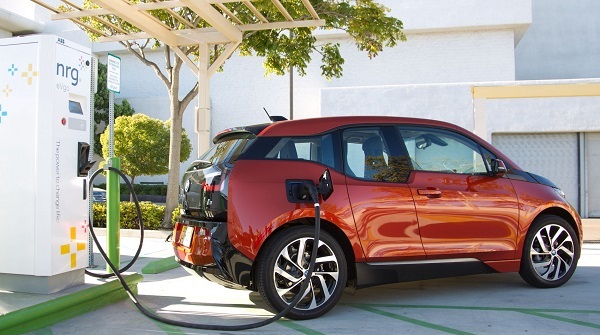
bmw-i3-dc-fast-charger
Image: BMW

DC fast charging makes electric cars considerably more practical, allowing drivers to recharge a car’s battery to 80 percent of capacity in half an hour or less.

But quick charging was widely thought to come with a major drawback: While it lowers recharging times, research so far has indicated that fast charging shortens the lifespan of lithium-ion cells.

Now a new study published in the journal Nature Materials (via Green Car Congress) claims quick charging is less damaging than originally thought.

Fast charging itself was found to be less important for battery preservation than the distribution of current through the electrodes.

Led by researchers from Stanford University and the Stanford Institute for Material Sciences (SIMES), the study focused on the behavior of a lithium-iron phosphate cathode material.

Researchers built small coin-cell batteries and charged them with different amounts of current for various periods of time. The batteries were then disassembled and examined with an x-ray to see how they responded.

If a higher percentage of the nanoparticles in a cathode absorb and release ions during charging discharging, it will last longer. If only a smaller proportion are involved, the battery will gradually degrade.

After examining the test batteries, researchers found that only a small amount of nanoparticles were absorbing and releasing ions–whether fast charging or not.

However, they found that the distribution of ions became more uniform above a certain threshold.

The study’s authors say scientists may be able to take advantage of this effect to create longer-lasting batteries.

The next phase of this research will involve cycling batteries through hundreds–or perhaps thousands–of cycles to simulate real-world use.

Researchers also plan to x-ray batteries while they are charging to get a better idea of how the materials behave.

Meanwhile, electric-car owners are likely to continue using the growing number of DC fast-charging stations in the U.S.–but now they may be able to do so more confidently.

Why Electric-Car Charging At Work Matters

Posted in: Green on September 2nd, 2014

For many electric car owners, charging at work is a nice bonus, but not a necessity.

For others, it’s the difference between choosing an electric vehicle, and not doing so–the extra charge at work makes all the difference.

But there’s another reason charging at work is important, and it’s all to do with the electricity grid and the “duck curve”.

Chargepoint founder and CTO CEO Richard Lowenthal explains the duck curve–and the benefits of charging in the “duck’s belly” on Greentech Media.

As we all know, electricity use ebbs and flows.

Households and businesses turn on their lights and computers early in the day, leading to a small energy surge. During the day, use is pretty consistent.

But as the world goes home for the evening, lights, televisions, air conditioners, ovens and other electrical appliances are all used at once, leading to a spike in demand that energy companies must always be prepared for.

Utilities are prepared all day, of course–varying generation according to how much energy is used at peak times.

The trouble is, power stations can’t match output precisely with use–any extra use would catch out the grid and the lights would go out.

Running a power plant at lower loads is often inefficient too–they have to be producing a constant flow of energy to be working efficiently. And ideally, people need to be using this energy.

This is where the “duck curve” comes in.

Developed by the California Independent System Operator, or CAISO, it’s based on the possible future scenario where customer-sited solar panels reduce the demand of grid-sourced electricity to very low levels.

This is most likely on sunny but cool days in the spring and fall, when air conditioner usage is lower than that of mid summer, and households and businesses are drawing less power.

Energy companies would have to reduce generation to avoid producing far more electricity than is used–but still have to crank up the power towards the end of the day when people come home from work and begin using electrical appliances in huge numbers.

This is the “duck’s belly”–a deep curve of reduced generation leading into a steep climb at the end of the day–an inefficient way of generating power.

duck-curve-of-energy-generation

The duck curve graph shows future energy generation figures as more and more renewable energy is generated during the day–and the disparity between power generation during the day and towards the end of the day grows. The duck’s belly gets deeper.

Workplace charging could fix this scenario, by giving us a flatter duck.

That doesn’t sound great for our aquatic friend, but it’s good for generation.

Should thousands of electric vehicles plug in at work during the day, energy suppliers would need to generate more power during this period.

This reduces the “belly”, in turn reducing the “ramp” towards 8pm, and more consistent generation means greater efficiency.

It costs money to generate power, so generating it more efficiently is much better value for all parties involved–helping reduce costs for the customer.

How quick charging may or may-not be hurting your electric car’s battery life

Posted in: Green on July 24th, 2014

quick-charge


Some electric car makers, notably Nissan with its Leaf, make recommendations that owners don’t charge too frequently using quick-charging stations. The belief is that the chemical processes involved in rapidly charging a battery can lead it to degrade faster than regular charges, reducing range.

But is that really the case? One ongoing experiment in Phoenix, Arizona, suggests it might not be–and that overall mileage could be more important. The Idaho National Laboratory (via Simanaitis Says) is currently evaluating four Nissan Leaf electric cars around a set network of roads in Phoenix.

Two of the cars are being recharged using ‘Level 2’ 220-volt, 40-amp recharging points, while the other two cars enjoy a DC quick charge–typically good for 80 percent capacity in around 30 minutes. Climate control is set to 72 degrees in all four cars, and all cars play by the same rules–when estimated range reaches five miles, the vehicles leave the looping route and return to base.

So far, all the cars have accumulated around 48,000 miles, and some interesting results are emerging.

At 10,000 miles, all four cars had lost around six percent capacity, irrespective of fast charging. By 30,000 miles, some differences could be seen–the Level 2 cars degraded an average 14 percent, three percent less than the fast-charged Leafs.

By 40,000 miles, the difference was still three percent–22 percent degradation for the Level 2 cars, 25 percent for the quick-charging cars. It seems to indicate that there’s not a huge penalty for repeated fast-charging, but total distance does begin to make a difference. Worryingly, in the 40,000 to 48,000-mile interval the average distance covered before reaching 5 miles remaining was just 57.5 miles for the Level 2 pair, 53.6 for the DC cars. At 10,000 miles, all four cars were still capable of over 70 miles between charges.

Testing in winter, Arizona’s high summer temperatures–already responsible for much consternation in the Leaf community–shouldn’t be playing a part either. Both the type of charging and the distance covered are clearly a factor in battery degradation. Idaho National Laboratory’s experiment concludes this month, so we’ll likely find out their full results following a report.

But those concerned that quick charging will ruin their batteries may not need to worry so much–it seems less a factor than how far you’re actually driving.

Announcing Our Solar Installation Services: Sub-contract or Turnkey

Posted in: Solar on July 11th, 2014

Finished installation

SRP Electric is an experienced Commercial Solar rooftop installer having over 5 megawatts (MW) of investment grade installations completed to date, with capacity ready to deploy immediately! (more…)

Essential components of what makes a good off-grid Solar Inverter

Posted in: Residential on May 10th, 2014

off_grid_solar_pv
This off-grid Solar system is completely cut off from the traditional grid. It best suits locations such as cabins in the woods, mountains or remote areas of the developing world with no electric grid.

This system also incorporates the battery and the power generator in its design. Instead of using a battery or generator as a simple back-up, it is used as a necessary component. The battery is used to save electricity for rainy days – literally – while a generator is needed when the battery drains out due to continues use and in days with no power production. (more…)

…And the winner is: Plug-in Electric Car Sales In Canada For March

Posted in: Green on April 14th, 2014

volt-electric-car

The vehicle industry has been in a lot of turmoil the past few months with recalls here and there. Main while on the plugin vehicle side of things, we have been noticing a gradual but steady increase in sales. This; demonstrated by the Nissan Leaf which has been gaining some noticeable momentum, and the Chevrolet Volt leading for March in plug-in electric-car sales for Canada. (more…)

Battery 101: Myths vs Facts

Posted in: Green on April 2nd, 2014

battery_charge

Do rechargeable batteries have a lower capacity than disposable alkaline batteries?

This is really a huge challenge for all of us because you can see companies everywhere advertising their “battery fact” as rated capacity and what they are really doing is perpetuating the “battery myth” that disposable batteries have a greater actual or available capacity than rechargeable batteries.

The actual or available capacity for a battery is way more important to actual usage but is also more complex to determine, because it really depends on what you are using the batteries for. (more…)